

Long-term monitoring of pollution using bird eggs
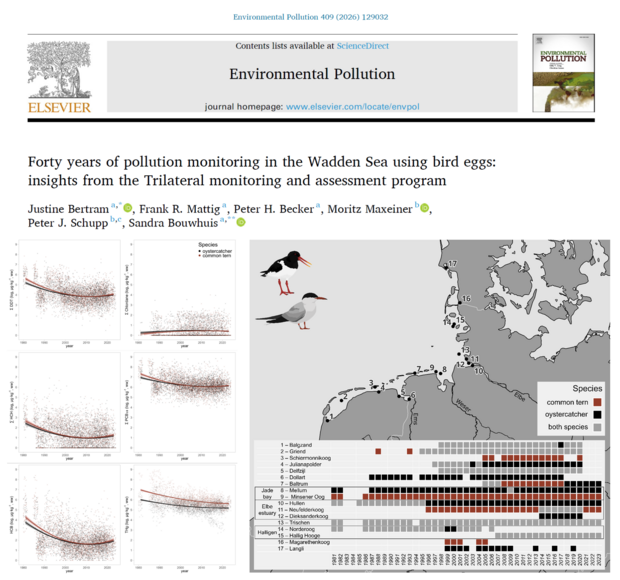
Long-term monitoring is essential for understanding environmental pollution. In a new paper, we make use of 40 years of measurements of persistent organic pollutants (POPs) and mercury in eggs of oystercatchers and terns breeding in the Wadden Sea, to investigate whether pollutant levels differed between the two species and 17 sampling locations, and how they changed over time.
We found common terns to show higher pollution levels than oystercatchers, consistent with them foraging at a higher trophic level (eating fish rather than mussels and worms). We also found that levels of most organochlorine compounds, but not mercury, were correlated, raising concern about potential synergistic effects on wildlife.
River estuaries were clear pollution hotspots. Encouragingly, concentrations of all pollutants, except Σ chlordane, decreased over time. Likewise, the proportion of eggs at more than low risk for detrimental effects of mercury declined since monitoring began (from 74% in the 1980s to 22% in the 2020s). Several pollutants, however, showed slight resurgence in recent years, highlighting the need for continued monitoring. Such monitoring should ideally also include more newly emerging contaminants.