

Aviathlon and migratory bird days 2026
Every autumn, hundreds of thousands of waders and waterfowl arrive in the Wadden Sea to rest and fuel up for their migration. An absolute spectacle! It is definitely worth a visit, when big flocks of dunlins and knots gather over the sea or golden plovers sparkle like a golden cloud in the autumn sun coming into their roosting site during high tide.
To celebrate this natural phenomenon and share the fascination for bird migration, the Wadden Sea National Park of Lower-Saxony organises Migratory Bird Days each October. Many events and activities invite everyone to come and listen, watch and admire the Wadden Sea and its inhabitants. The goal is to raise awareness for the huge responsibility we have for this ecosystem.
It is the Aviathlon especially, that invites everyone to go out and watch, count and report birds in the area. It is a competition between mainland regions and Wadden Sea islands to see where one can find most bird species over the course of eight days.
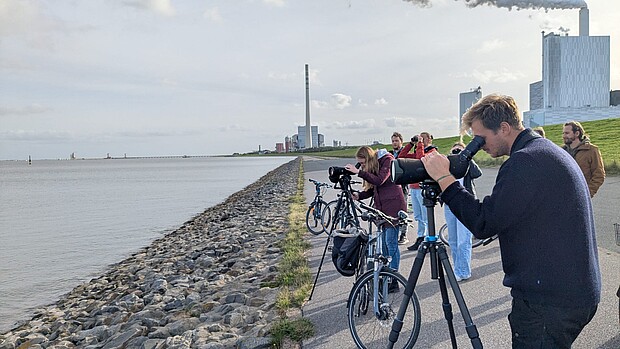
Of course, the institute also gets involved. After colleagues from the National Park administration had already put in a huge effort to push Wilhelmshaven to the front of the leaderboard in the mainland category, it was our duty to fill some gaps. So, on a sunny afternoon, a group from the institute hopped on their bikes and went to the coast to enjoy some birdwatching and find more species for the list.
It did not take us long to find some ducks at a local pond and a white-tailed eagle flying over. A peregrine falcon was enjoying the afternoon sun on top of the local power plant and provided excellent views. Arriving at the coast it got interesting: gulls! We were still missing caspian and yellow-legged gulls for the list. Single individuals of both can be found quite frequently at the coast, especially during winter. But finding them is the hard part.
Gulls don’t make it easy for us birdwatchers since they have so many different plumages, which, depending on age and species, can look quite similar. This day we got lucky though and it didn’t take us long to find a juvenile caspian gull and an adult yellow-legged gull among the hundreds of herring gulls. Two new species for the list, check!
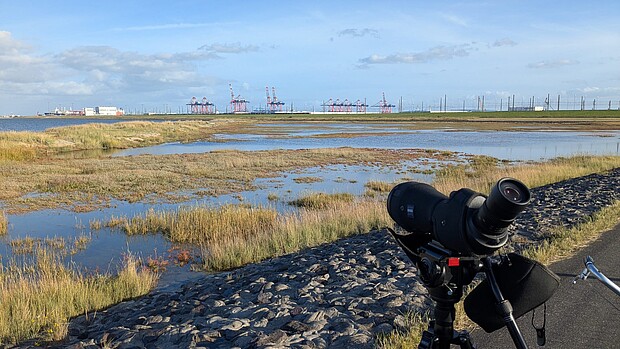
Following the coast, we made our way to a little beach with numerous wading birds around. Common ringed plovers, oystercatchers, curlews, turnstones and purple sandpipers, just to name a few. On the sea some eiders and great crested grebes were floating around.
But the Wadden Sea is not only an important refuge for waders and waterfowl. There are also typical songbird species that can be found here. In winter, horned larks and twites visit the area to feed on seeds at the shoreline. We were lucky to find both of them as well! A sound recording at the institute revealed a late green sandpiper, a new species for the list as well.
In the end, we found over 45 species in just a few hours and extended the list for Wilhelmshaven by three species. In total, 150 bird species were observed in Wilhelmshaven during those eight days, a new record! The incredible and organised effort of many local observers paved the way for a historic victory! Never before has Wilhelmshaven won the mainland category during this event, but with our 150 species we share first place with Cuxhaven.
This autumn of historic records proved to go on as also Norderney won the island category with a new record: a whooping 180 species observed! And if that would not have been enough, the total number of bird species observed provided a new record too, with 230 species! Incredible performance of all the local and visiting bird watchers!
Many thanks to the Wadden Sea National Park for organising this event, as always it has been a lot of fun! See you next year!