

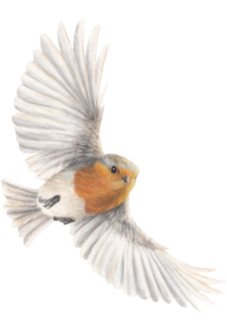
The European robin genome decoded
To mark its 25th anniversary, the Wellcome Sanger Institute sequenced the DNA of 25 new genomes. This identified the genetic code of 25 previously unknown genomes and created reference genomes for various species, including the European robin.
European robins (Latin: Erithacus rubecula) are birds that show strong variability in their migratory behaviour. Some populations migrate south, while others remain where they are. This variable migratory behaviour makes them ideal candidates for studying the genetic components that control migratory behaviour within the same species. In addition, the magnetic compass that allows birds to “see” magnetic fields and use them for orientation was first discovered in the European robin. The availability of the genome of this bird species will help researchers such as Miriam Liedvogel better understand how migratory behaviour, and variability in migratory behaviour, is controlled in birds as well as in other species.
This short video clip provides a brief summary of the European robin and its genome, explained by Miriam Liedvogel.
More information about the Wellcome Sanger Institutes 25 Genomes for 25 years can be found here. The project was part of the SFB 1372 Magnetoreception and Navigation in Vertebrates.